The Florio firm’s rise in Palermo
The Florios of SicilyThe Florio firm’s rise in Palermo marks the transformation of a small shop associated with newcomers from Bagnara into a recognized mercantile house. Its progress is measured not only in larger premises and a wider range of goods, but also in a new public identity: the Florios become merchants whose name carries weight in transactions, even as Palermo’s old elite continues to distinguish money earned through commerce from inherited rank.
The port economy and the spice trade
At the turn of the nineteenth century, spices were valuable precisely because they were difficult to bring to market. Cinnamon, ginger, and other goods passed through many hands, crossed long inland routes by mule or camel, and then traveled by sea to European ports. Each leg added cost, making spices—including those sold for medicine—commodities available chiefly to people with means. Trade routes and political power shaped their supply: Venice had once built wealth through spices and customs duties, while British and French traders now brought colonial goods, alongside sugar, tea, coffee, and chocolate, into an expanding market.
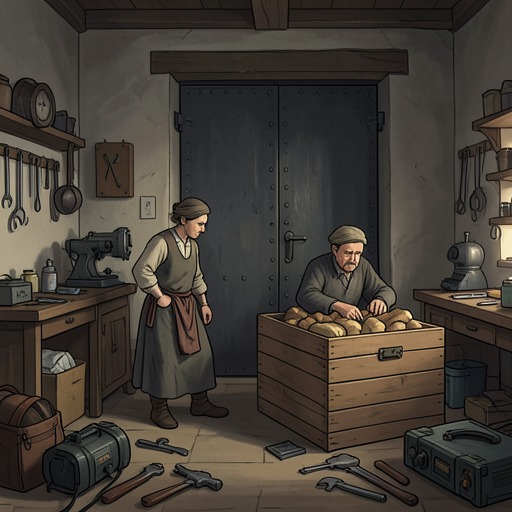
Palermo’s aromatari, or spice and medicinal-goods sellers, operated within this changing commerce and had organized themselves into a guild with its own church, Sant’Andrea degli Amalfitani. As the range of imported goods and the number of sellers grew, the market offered openings to newcomers but also placed them in competition with established firms. Paolo Florio and Paolo Barbaro opened an aromateria in Palermo after leaving Bagnara. The move was not presented as a voluntary adventure for the whole household: Paolo told Giuseppina that she would go with him, insisting on his authority as her husband after she refused.
From mistrust to recognition
The firm’s early reputation was hard won. By Christmas 1799, the Florio brothers were known, but the shop had spent a long period under the shadow of local suspicion and rumors circulated by Carmelo Saguto, the son-in-law of Don Canzoneri. Other aromatari stayed away, partly from fear and partly to avoid offending Canzoneri. Paolo remembered waiting at the shop door for a customer or a fellow seller willing to reserve spices, while Saguto’s contemptuous looks made the store’s isolation visible. The firm’s subsequent recognition therefore did not arise from a sudden stroke of luck alone: a favorable shipment helped, but the narrative distinguishes that chance from the work and strategy that followed.
The change is also expressed through Paolo’s name and standing. Once he had been simply a man from Bagnara; now he was Don Paolo Florio. That name appeared on bills of exchange and documents, and storekeepers who had sampled the firm’s goods returned to buy from it, countersigning contracts. Commercial credibility had become legible in paperwork and repeat business. The shop’s ascent was thus both material and social: goods moved through its counter, while the name on its documents established a claim to trust.
Expansion, storage, and a changing identity
The firm’s physical premises registered its growth. A new counter and herb and spice jars replaced the earlier arrangement, the shutters were repainted, and they bore only the name Florio. These details coincide with the end of the Paolo Barbaro and Paolo Florio company: by February 1803, the partnership had been dissolved for a month. The transition did not mean that the Florio business disappeared. Instead, the distinct Florio name marked a new phase after disputes with Barbaro, including a disagreement over a consignment of buffed ivory and cinnamon that Barbaro sold to another shopkeeper at a very low price.
The family’s trade reached beyond the shop and its first stockroom on Via dei Materassai. The firm rented guarded storage rooms within the Palazzo Steri property, in a corridor behind the accounts office. There it kept goods in transit to other ports or awaiting sale to merchants. This arrangement also mattered financially: import duty was paid only when goods actually entered Palermo, so paying rent on storage could be preferable to paying tax earlier. The rooms held Indian spices obtained through British channels as well as goods from French colonies, bought in Livorno and carried by Italian sailors into Palermo. The Florios had access to high-quality merchandise from across the Mediterranean, though they still could not claim the Canzoneris’ wealth. Their original stockroom eventually proved too small, a practical limit that itself testified to the scale of their growing business.
That expansion took place amid renewed conflict at sea and a shift in Palermo’s position. With British and French hostilities disrupting Mediterranean shipping, merchant vessels faced greater danger and British maritime dominance was challenged. Palermo and Sicily became a free port outside French influence and occupied a central position in Mediterranean commerce. Merchants and sailors arrived from across Europe; French goods came through northern Italian ports, British goods through Malta, and other cargoes came from Turkey, Egypt, Tunisia, and Spain. The Florios’ success depended on navigating this broad, politically unsettled network rather than on a single local source of supply.
From shopkeepers to merchants
The narrative makes the change in status explicit when Ignazio Florio waits for the reopening of the shop. Onlookers and aristocratic servants gather outside the modest store, ostensibly to see what is happening, while their curiosity is mixed with suspicion and envy. Ignazio sees the firm’s struggle with Don Canzoneri, Saguto, and Palermo’s other aromatari as a new contest. The decisive difference is that the Florios are no longer merely shopkeepers: they can call themselves merchants. The old trade network has not simply accepted them; their advance unsettles competitors and observers who had expected them to remain marginal.
The firm’s later range shows how far that merchant identity extends. Sulfur from Sicily is dug from underground workings by men and children carrying baskets of yellow stone; it is weighed, bagged, and shipped to European markets, especially Britain, as well as France and northern Italy. The wealth of the trade rests on strenuous labor and on the movement of raw material out of Sicily. In a later household scene, a can of tuna from the Arenella tonnara, owned by Vincenzo Florio in partnership with Augusto Merle, connects the family’s table to another commercial undertaking. The book’s succession of spices, sulfur, and tuna presents the firm not as a single shop with one successful product, but as a business whose identity comes to encompass multiple goods and forms of trade.
Wealth without full acceptance
Commercial success does not dissolve the distinction between wealth and noble status. Isabella Pillitteri, a baron’s daughter whose family is burdened by debt, regards Vincenzo as a socially inferior match despite his family’s money; she calls him a shop boy elevated beyond his station. When her mother rejects him, she insists that money earned through labor cannot substitute for blood. The confrontation makes explicit a rule that later encounters continue to enforce: commerce can make the Florios wealthy and influential, but aristocratic families retain control over the honor attached to ancestry and marriage.
That barrier persists even after Vincenzo has built Casa Florio into a substantial enterprise. At a gathering with Palermo’s aristocracy, Giulia feels the judgment of women whose old family standing makes her own lace and dress seem suddenly without value. She is treated as the kept woman who became a wife, and as a bourgeois outsider, rather than simply welcomed into the circle. The scene shows that social recognition does not follow automatically from wealth, marriage, or a fine home.
The same division shapes the future of the firm. Vincenzo hopes to marry his daughters into a respected family, but Gabriele Chiaramonte Bordonaro tells him directly that business dealings are one matter and family another. The daughters’ birth circumstances, he says, make the proposed marriage unacceptable, even though Vincenzo’s money would otherwise make him a desirable relation by marriage. Vincenzo’s humiliation is consequently bound to the business’s success: he has made Casa Florio formidable, yet cannot convert its wealth into the unquestioned legitimacy the aristocracy reserves for birth.
The firm’s rise therefore carries a double meaning. Its name gains authority through contracts, returned customers, wider trade, and expansion beyond the original shop. But its commercial power remains in tension with the old status order. Vincenzo understands that distinction as he watches aristocrats assess the furnishings at the Quattro Pizzi: they can see his wealth, yet fail to understand the labor and sustained attention behind it. His own account of what has occupied him—work, the sea, ships, tuna, sumac, sulfur, silk, spices, and Casa Florio—makes the family business both the instrument of ascent and the inheritance he believes must be protected for the next generation.